
Effective training is more than just putting in miles or going to the gym.
Purposeful, well-structured workouts deliver the best results. They signal to body to direct its finite resources to the specific adaptations that will serve us best. Progress comes systematically and reliably.
In the Train to Hike system, we target the fitness that matters most.
• All Day Endurance (AE)
• Mountain Legs (ML)
• Chassis Strength (CS)
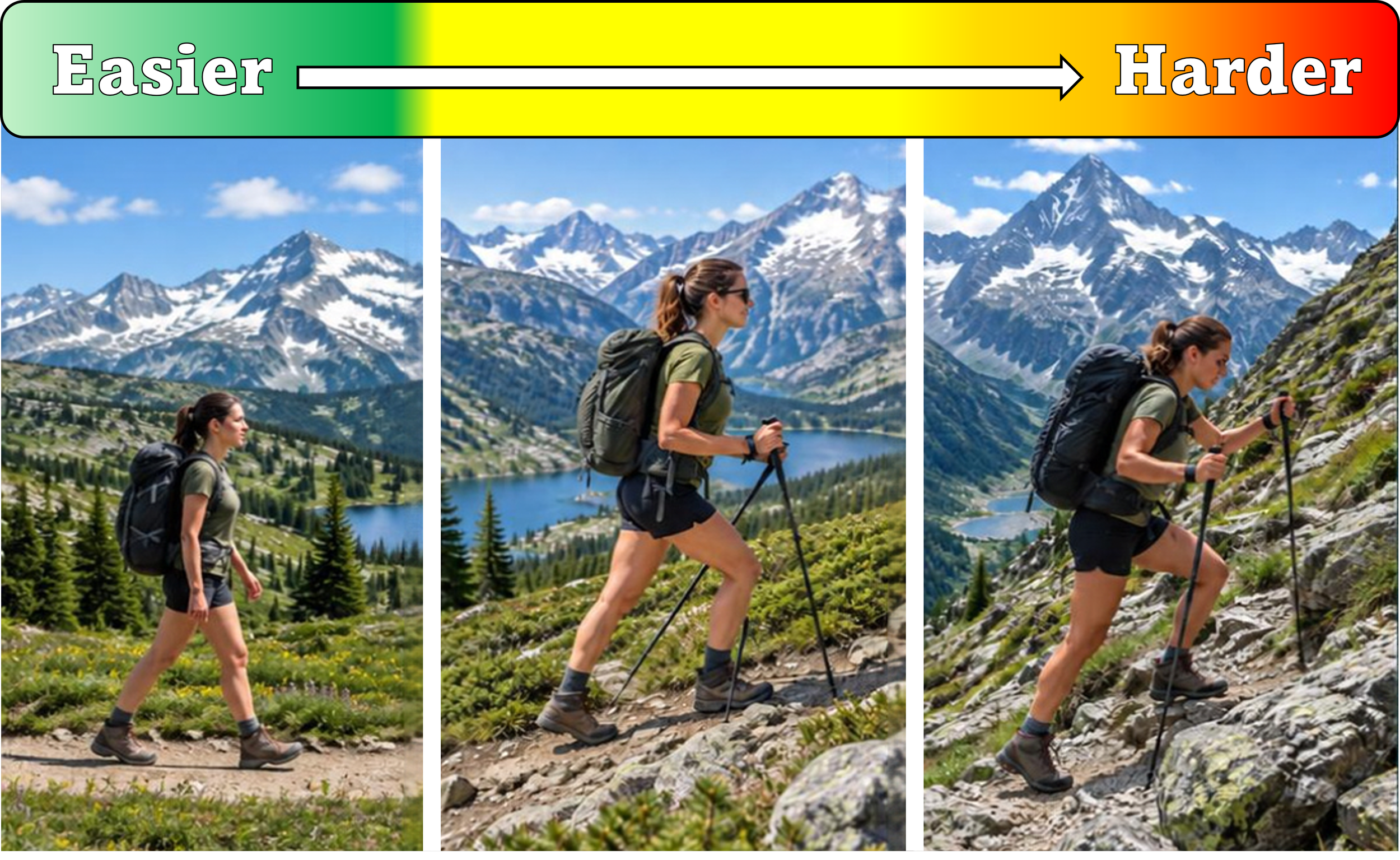
Our primary controls for pure AE workouts are intensity and duration.
ML workouts also involve intensity and duration – plus steepness (grade), and vertical (gain/descent).
Intensity is our effort level - how powerfully we work. It is a product of pace, steepness, and load.
Duration is session time - how long we sustain the effort.
Different workout structures impose different muscular and metabolic demands. When we pull the right levers, we send the body clear signals to make the specific adaptations we want. That’s far better than “just going for a hike” and hoping something good happens.
To guide effort levels, we assign an intended intensity zone to a workout.
Zones reflect critical aspects and phases of endurance physiology. Unless you are a physiology geek like I am, it can be eye-glazing stuff: muscle fiber type recruitment, fat versus carbohydrate metabolism, enzymatic activity, lactate utilization and accumulation, muscle acidity and buffering, and more.
The quick version:
Zones 1 and 2, the “easy” zones, prioritize use of fatigue-resistant, slow twitch muscle fibers and fat metabolism - a great place to train All Day Endurance. Around 80-90% of your endurance training will be here.
Zone 3 work is powered by a mix of slow- and fast-twitch fibers and both fat and carbohydrate metabolism. That’s a big deal for steep terrain - we want our faster twitch muscle fibers to be available and more fatigue-resistant. You’ll get better at operating in Zone 3 in some of your Mountain Legs workouts.
Zones 4 and 5, the “hard” zones, are fast-twitch and carb-intensive. For mountain hiking, they produce little usable fitness, but cost lots in terms of fatigue and injury risk - a poor investment of our time. We generally avoid rather than target these high intensities.
To use zones productively, read the perceptual cues your body is giving you during the workout.
Gauging Intensity During Training
Check your intensity level – the zone you are operating in – every 10 minutes or so, and whenever the terrain changes. Take quick stock of three indicators:
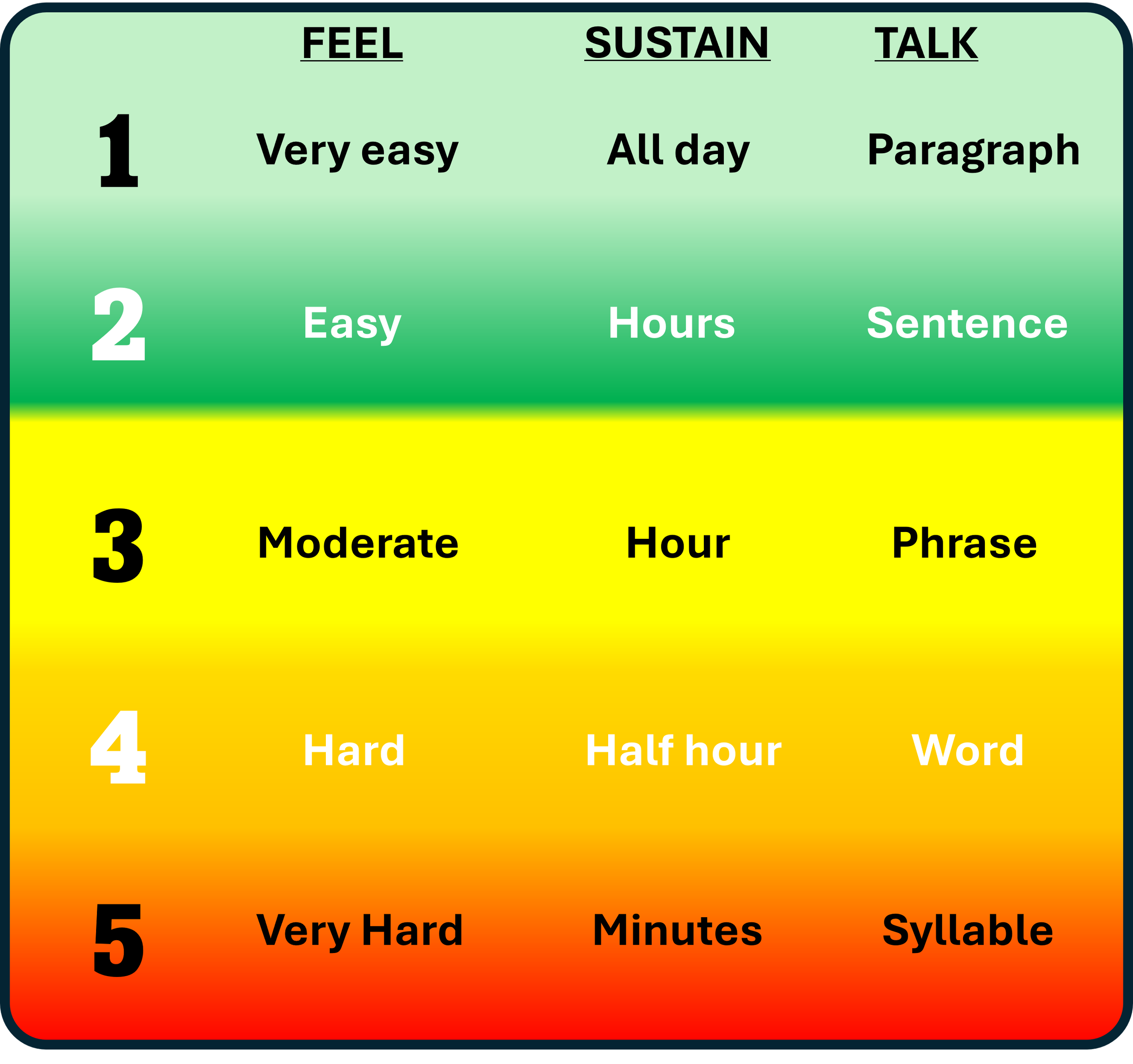
How does the effort feel? Easy, moderate, or hard? Don’t overthink it. Trust your first impression.
How long could you sustain your current pace? Hours, about an hour, or only minutes?
How well can you talk without having to rush, pause, or take noticeable catch up breaths? Sentences? Phrases? Only a word or two?
Use the “talk test” - and please don’t fudge it.
Pick a favorite 10-12 syllable sentence and use it consistently.
Say it aloud and notice whether you have to rush, pause, or take an extra breath.
This is a great, scientifically-validated indicator of your actual metabolic state.
How about “I have seen it raining fire in the sky.” Or, “Long and easy builds my all day engine.” Or, “I am a hill flattening mountain beast.” (Pick one that make you happy!)
Try to stay solidly within the intended zone. If the cues seem mixed, don’t loiter on the edges. Adjust your pace until you’re confident you’re in the desired zone. That will send your body clear, effective signals about what we are trying to get it to do today. Train with us, and we will teach you how.
More is not more, faster is not better. I’ll just say it: gung ho, no-pain-no-gain, magical, latest-greatest workouts are complete are unmitigated baloney. Every single one of them. Remember that the goal is the event you are training toward. Training is the means. The goal is not epic workouts or setting personal records in training - though eventually you surely will. Train smart, consistently, for months. Amass time at productive intensities and durations. Avoid excessive fatigue, burnout, and injury risk. We’ll take extensive (longer) over intensive (harder) every single time. That is the reliable way to build All Day Endurance and Mountain Legs without wrecking yourself - and achieve your goal.
We generally don’t use heart rates as zone boundaries unless we have reliable testing and similar training conditions (for example, in things like treadmill testing and training, or cross training on an indoor bike - where heart rate is a useful metric). On the trails, lots of factors affect the relationship between your heart rate at any moment and your actual metabolic state. In our world, chasing a stable heart rate is like chasing a greased pig. The perceptual cues tend to work as well or better than trying to maintain your effort at a steady heart rate.
The Bottom Line
Use intensity to zones to guide your effort in endurance workouts. The right effort level focuses the stimulus on the specific adaptations we want to achieve. With a little know-how and practice, you’ll master the cues your body is giving you about your effort level and metabolic state. Using zones promotes coach-athlete communication, systematic training, consistent progress, and effective stress management.
