
Mountain athletes are naturally wired for hard work. We pride ourselves on mileage, hours, and vertical gain. Our work ethic is epic. But there is a fine line between successful training and structural self-destruction.
Rushing the training process is a fast ticket to injury, interruption, and disappointment. Athletes fall victim to the “terrible toos:” training too much, too soon, too fast, or too heavy. And that, not under training, is what is most likely to derail us.
Our number one job is to reduce your risk of injury, both during your goal event and during the training process. Performance is important - that’s why we’re doing this - but Rule Number 1 is always “Don’t get hurt.”
Linear Progression: Just Don’t Do It
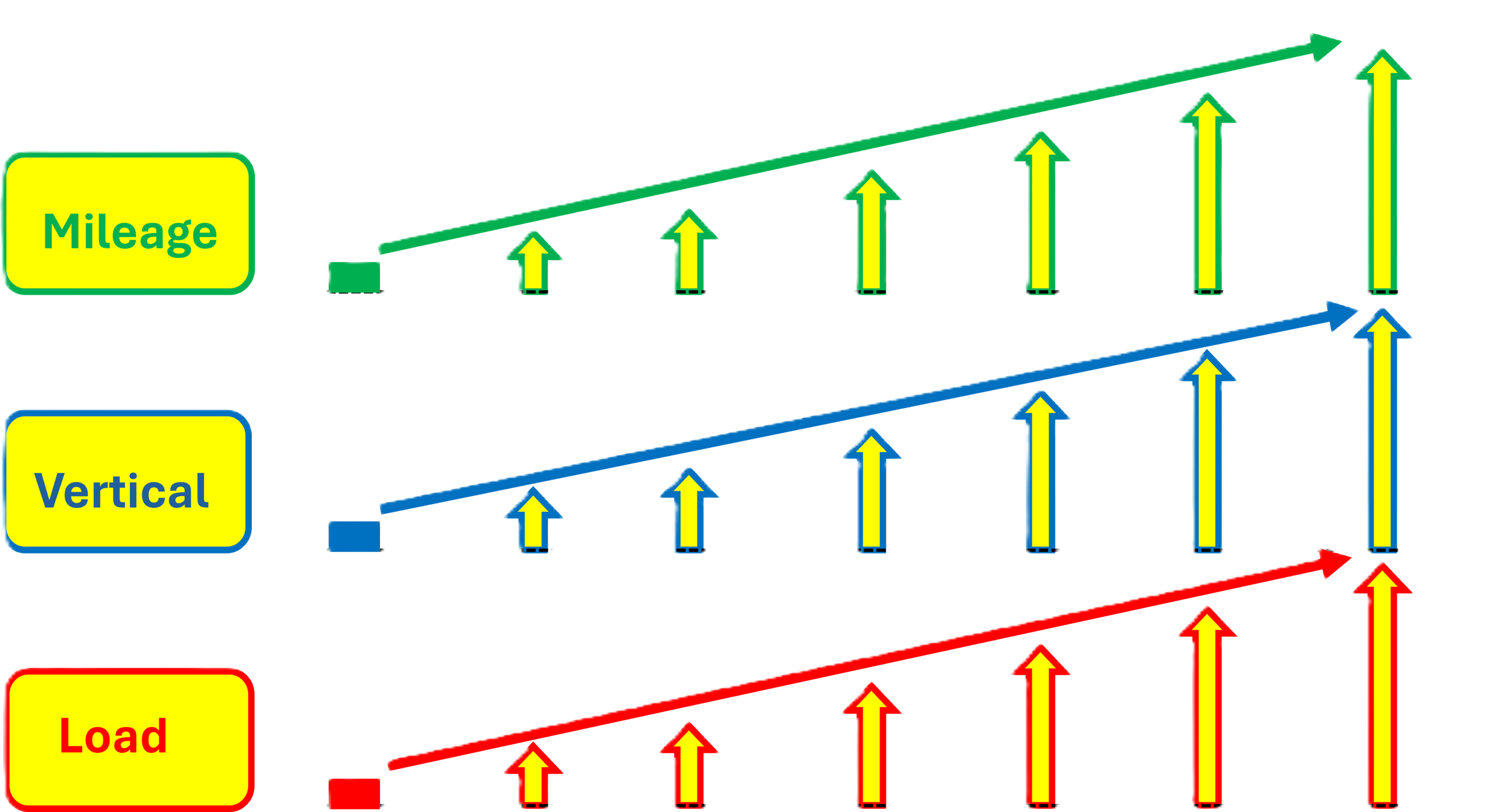
Too many athletes approach training like a straight line on a graph. They expect to add 10% to their mileage, five pounds to the bar, or 500 feet of vert, week after week.
They have the best of intentions. And they might get away with it for a while. But eventually the bill comes due.
The problem: human physiology adapts on its own timetable, not ours—and it never follows a straight line.
Injury rates in sports like road running are astronomical - largely due to training errors - usually some form of the terrible toos.
It doesn’t have to be like that.
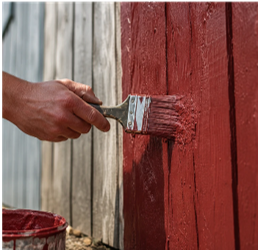
Adapting to progressively higher training stress is like painting a barn. You must let each coat dry completely before applying the next one. Rush the process, and the finish falls apart.
In your body, that "wet paint" phase is the tissue disruption brought on by training stress. It takes time for the body to complete its structural repair and remodeling.
The core issue is a physiological timeline mismatch. You start or change your training, and some muscular and metabolic adaptations begin to kick in. Your perceived exertion drops. You feel ready to ramp up your mileage. You are feeling “Let’s go!” at the exact moment you should be thinking “Careful!”
Because connective tissue – where most of the common running and hiking overuse injuries occur - operates on a different biological clock.
Tendons, ligaments, and bone have vastly lower blood supply than skeletal muscle. While your “legs feel great” (by which everyone who uses the expression means their leg muscles), your Achilles tendons, plantar fascia, patellofemoral tendon, and IT bands are still weeks behind. Too much volume, added too soon, forces a new layer of paint (new stress) onto a structure that is still wet (still in the process of adapting to the prior stress).
Step-Wave Progression and the Minimum Effective Dose
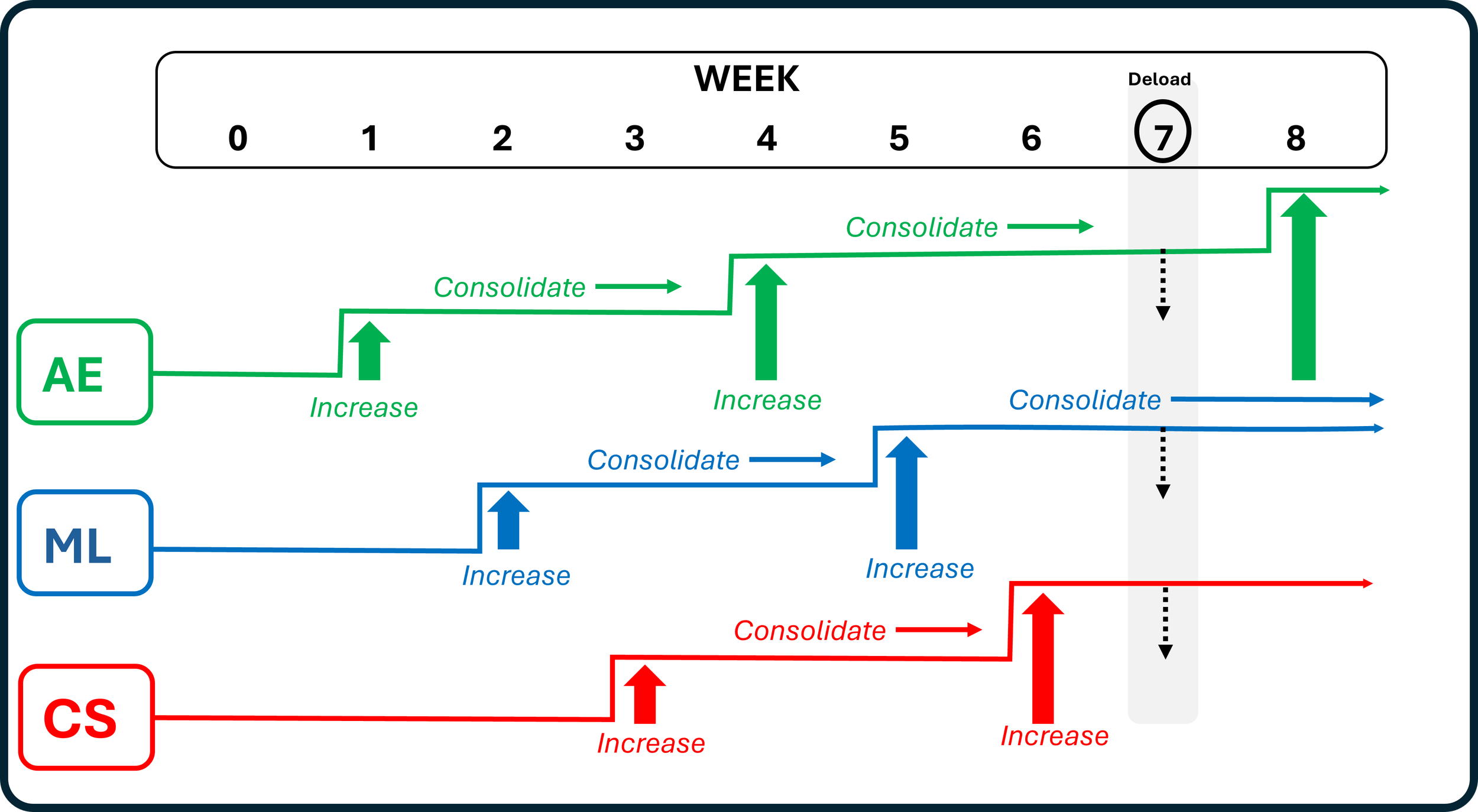
To avoid the terrible toos, we use what we call step-wave progression in our programming. Instead of a continuous ramp, your progress through higher volumes and intensities looks more like a flight of stairs.
Our approach operates in coordinated 2-4 week training blocks. Training blocks are a series of small, calculated builds (increases in volume or intensity) followed by periods of consolidation to allow your body to catch up.
For most, we also use periodic deload weeks – stepped-down volume and intensity in all workouts – as extra insurance against the terrible toos.
Our programming usually involves three broad categories of workouts, each of which imposes specific kinds of muscular and metabolic demands.
(AE) All Day Endurance sessions build the ability to move steadily for hours. Workouts emphasize maintaining a relatively low intensity effort level for progressively longer durations.
(ML) Mountain Legs sessions build the ability to climb and descend steep terrain - a mix of sustained strength and endurance at moderate effort levels. They progress in terms of pace, steepness, and/or vertical gain.
(CS) Chassis Strength sessions improve our ability to drive and control our movement through mountain terrain - without breaking. We use resistance training exercises tailored to the athlete’s current strength and technical ability, from novice to advanced.
We “wave” the increases in the volume or intensity of AE, ML, or CS sessions in a serial fashion, never all three at once, always driven by how well you are handling the current workload. Your weekly AE time might increase 30-60 minutes one week, then stay right there for 2-3 weeks. Your vertical gain on your ML days may increase 500’ the second or third week. Your main strength exercises will often increase in challenge by 5-10% every third or fourth week, but only if you are ready to move forward. Conversely, if we get signals that your body needs more time, we dial things back, consolidate there, and then resume progress when you are ready to do so, not based on any rigid timetable.
The exact sequence varies with every individual, but you get the concept: we progress each type of workout on its own timetable. Tissue gets the chance to toughen at rates the body can handle. Each layer of “paint” gets to dry.
Consistency Over Aggressiveness
Careful, restrained progression is the surest ticket to steady long-term progress. Success is not about epic workouts or monster weeks. It is about how many effective workouts you complete over months and years. Staying on a sound flight plan – not barnstorming.
Consistency beats aggressiveness. Start training long before your goal event. Progress in steps, recognizing the remodeling rate of your tissue. Use smart doses of training stress, not the most you think you might be able to get away with, at every step.
Let the paint dry. That’s how to paint a barn – and how to maximize your odds of training safely and being ready to nail your mountain goal.
