
We need chassis strength to perform our best in mountain terrain. That means we need to be able to drive propulsion and braking forces into the ground, and withstand repetitive impact and destabilizing forces . . . without breaking.
Any exercise that asks your body to produce substantially more force than it is accustomed to producing signals your body to get stronger. We’re talking about exercise in which you are pushing or pulling at about an 8 out of 10 effort level by the end of the exercise.
Don’t feel like you must “lift weights” in a gym setting to build useful chassis strength that will help you drive through mountain terrain without breaking.
We can get stronger regardless of our resources with appropriate resistance training. The resistance – the thing that signals our body to get better at producing and resisting force – can be our own bodyweight, a loaded backpack, external weights like a dumbbell, kettlebell, or barbell, or a strength training machine. We just must use the right exercises for you and your circumstances.
As mountain endurance athletes, we have a variety of exercises to choose from that all deliver the increased capability to apply and withstand force that we are after.
Training with equipment can work well – but we’re not trying to become powerlifters, weightlifters, or football players. For every strength building exercise that uses a barbell, there are other exercises that will do the job of making us more powerful, more resilient athletes in our mountain domain.
Train with Lift Run Hike, and we’ll use the right exercises for you to get better at driving yourself through the mountains without breaking.
You will get stronger, and probably faster than you ever imagined – and have fun doing it.
You’re going to love the stronger version of you – and you’re going to eat up the trails like never before. Get ready to go stronger, longer, faster, and farther.
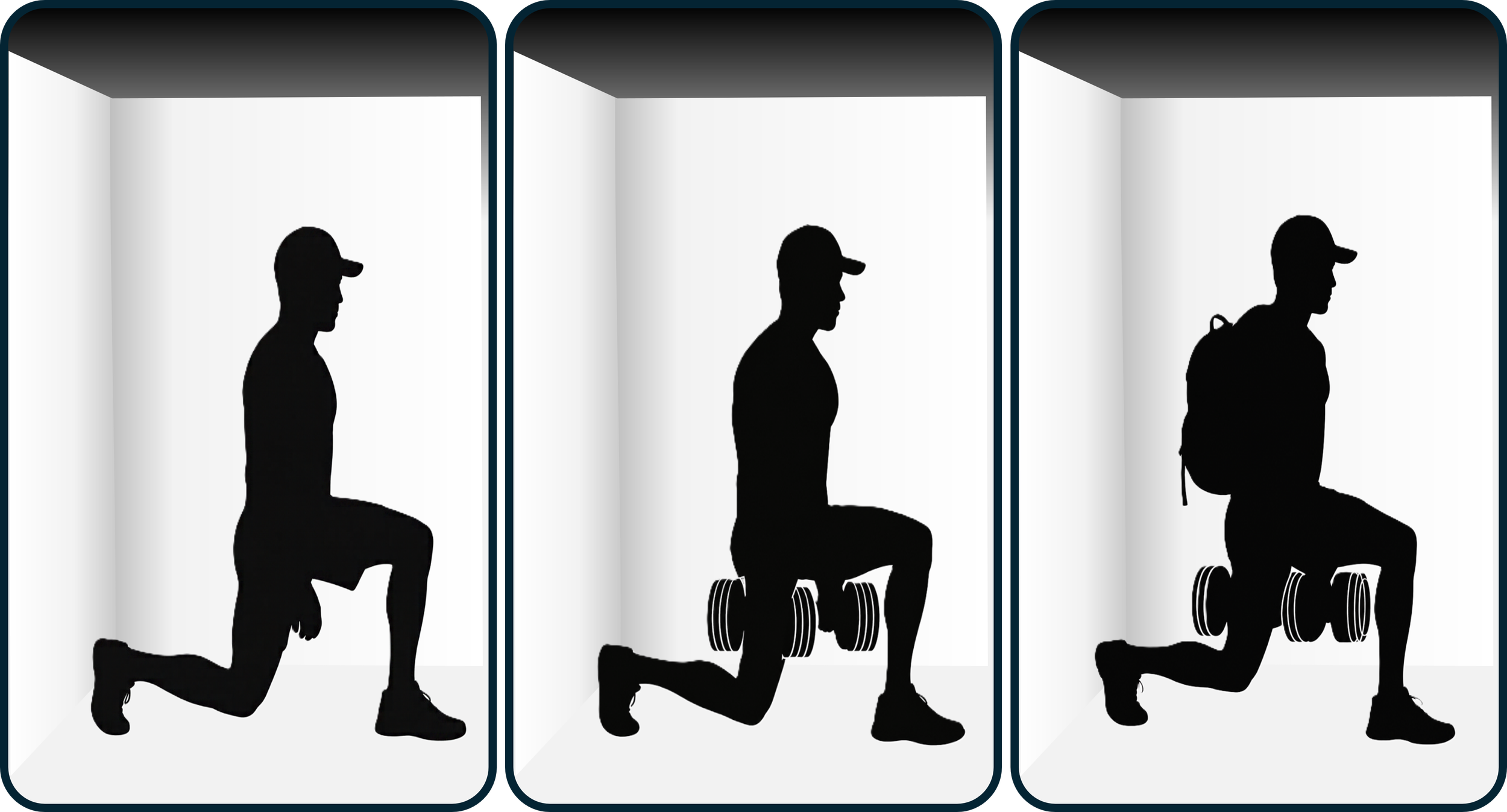
Highly effective exercises like lunges can begin with our own bodyweight. As we get stronger, it is simple to progress to higher levels of the exercises and keep the chassis strength improvements coming.
