
Resistance Training and Mountain Fitness
Resistance training (RT) builds the body’s ability to produce and withstand force. It makes us stronger and more durable. It does that job reliably, safely and efficiently. Nothing else comes close.
Depending on the exercise, the resistance is supplied by our own body weight, or for some people, by implements like free weights, bands, or machines.
Endurance is always priority one. The strength we build with RT doesn’t replace the endurance and trail readiness we build by hiking, rucking, or trail running. But stronger people can do more endurance training - without breaking - than weaker people can. When we can work up to longer endurance sessions and more endurance volume (time or mileage), staying healthy and having fun, endurance skyrockets. RT helps us get there. That’s why we do it.
We want our RT to accomplish two big things. Together, we call them Chassis Strength.
Structural Strength & Resilience
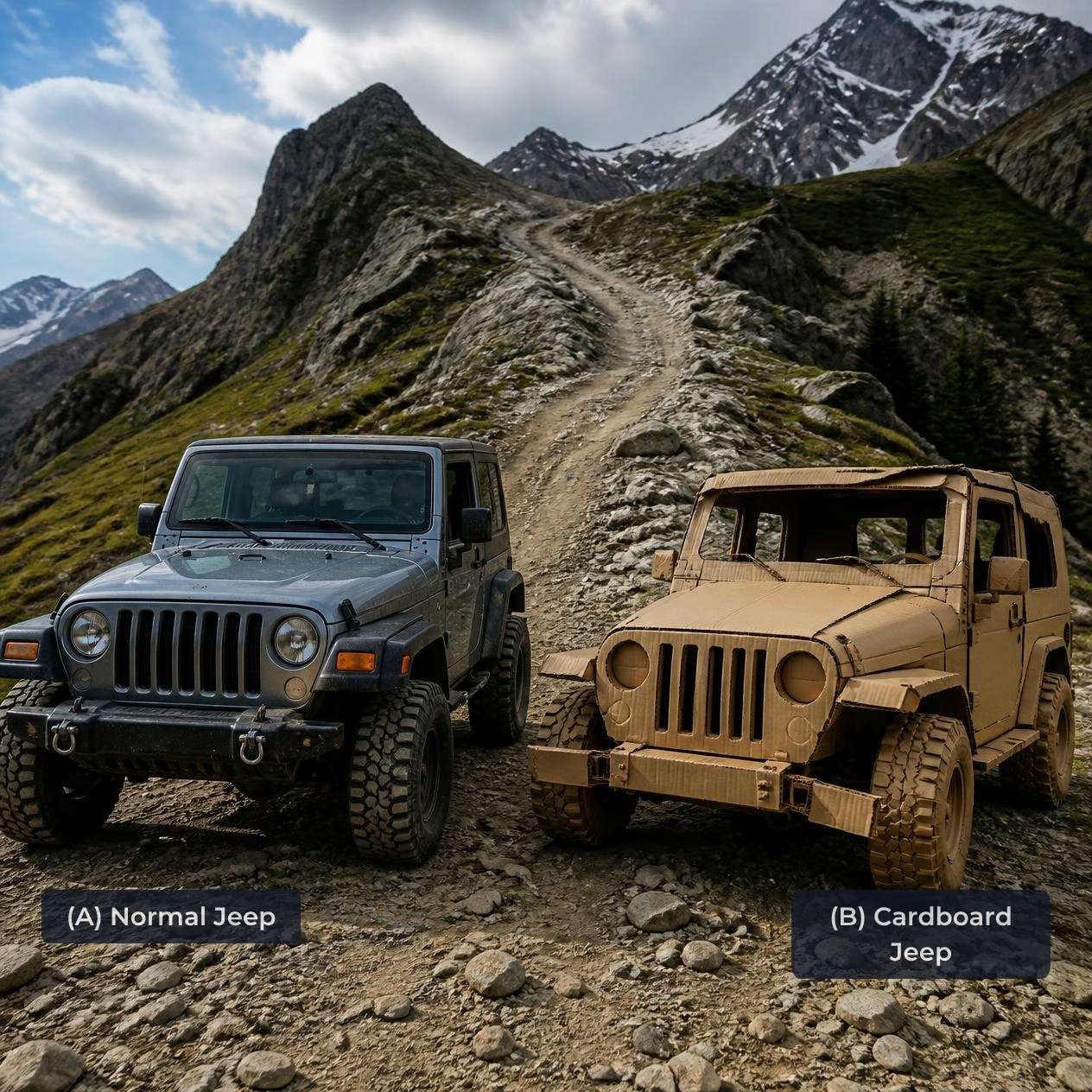
Suppose you must drive up a steep, rugged four-wheel-drive road. You get two vehicle choices. You can pick (A) a Jeep with a steel drive train, or (B) a Jeep with a cardboard drive train. Why does everyone choose steel? When you are moving on foot through big mountains, the Jeep is you.
Appropriate resistance training builds denser bones, tougher connective tissue, and stronger muscles. Result: a drive train better able to withstand impact forces that we absorb thousands of times per day. It also strengthens the smaller, less famous muscles and connective tissues that counteract destabilizing forces. That’s the strength that keeps your joints aligned, and you in balance and upright, when gravity and the terrain underfoot tries to topple, bend, and break you.
Propulsion and Braking
Every step and stride is an act of applying force. Your hips and legs drive your feet into the ground. When using your poles, your upper body drives your poles into it.
On the flats and the uphills, it is about accelerating your weight forward and upward – propulsive force. It is the force you must apply to maintain or increase your pace.
On the downhills, it is about deceleration and control – braking force. It is the force you must apply to manage your downhill speed.
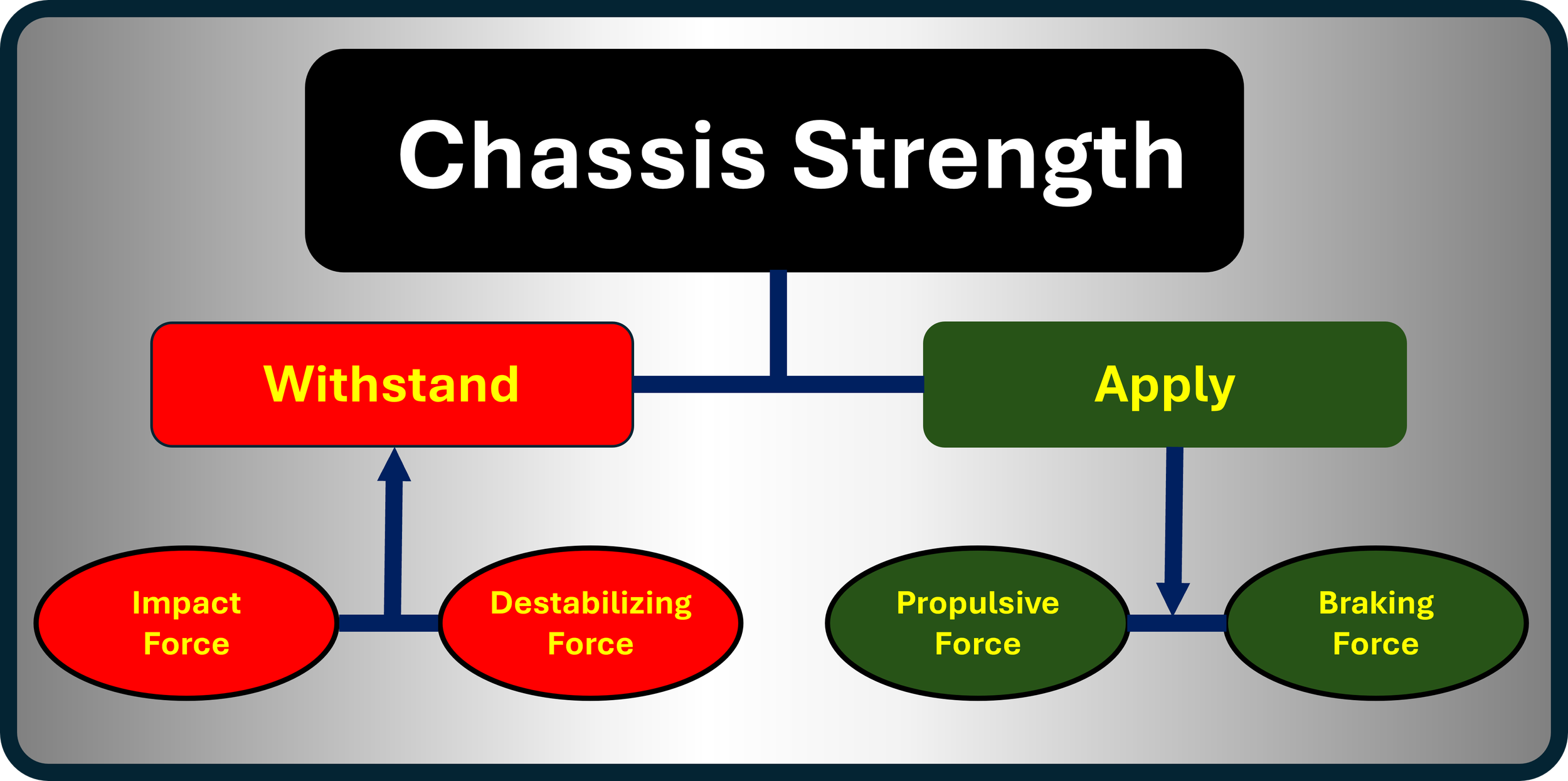
Chassis Strength is the term we use to capture both these goals – the ability to drive force into the ground, many thousands of times in a row, without breaking. Endurance training itself improves these capacities, especially over long periods of high volume training. But nothing builds bone, tendon, and muscle strength - including in the stabilizing muscles that keep us in alignment - like well-designed and consistently executed RT. Together, they work like a forge and hammer - you become that steel Jeep you want to be.
We aren’t interested in building excess or unnecessary muscle mass. It would only weigh us down. We aren’t interested in aesthetics - although everyone looks more athletic when they get stronger. And we never use circuit training with light weights and high repetitions for endurance - we use real endurance training for that job.
Training that builds chassis strength - what we are interested in - is laser focused on one purpose: better performance and durability in strenuous mountain travel - including the endurance training we do to prepare for it.
When you train with us, your RT will typically be one or two 30-60 minute sessions per week. Workouts will be efficient, effective, and specifically designed for you. We work hard to make sure your RT integrates smoothly with your top priority, endurance training.
Don’t worry if you haven’t done any strength training before, or if you can’t train in gym. We can use body weight exercises or home gym equipment. We’ll always start with movements you can safely handle and teach you everything you need to know.
Of course, if you can train in a well-equipped gym, all the better.
Your RT will probably include some of the following:
· Hip and leg exercises that build strong, stable, durable propulsion and braking.
· Pushing and pulling exercises for basic upper body strength.
· Core exercises for postural strength and balance.
· Special exercises for unique needs .
Bottom Line
We love the mountains, but they don’t love us. They always find weakness. They never forgive it.
Let’s not be the cardboard Jeep up there.
Let’s do the right kind of RT, and be the steel Jeep.
