
Deep in a long, tough day in the mountains, endurance can seem to be a mental battle. We talk about "grit" – the will to keep putting one foot in front of the other. Mountain travel does require mental toughness. But grit drives a much deeper, entirely physical reality.
Fundamentally, the ability to resist fatigue and push on is a metabolic event. All the grit in the world won’t move us a step without the energy to do the work.
The Energy Currency
Every movement we make, from an eye blink to a powerful stride up a steep grade, is powered by a single molecule called adenosine triphosphate, or ATP.
It is the “energy currency” of every cell in the body - the spark of life.
Movement happens because muscle cells (aka muscle fibers) contract. That takes energy. Fibers get that energy by breaking apart ATP molecules. Chemical energy becomes mechanical energy – and with it, we move.
Our bodies store only a few seconds worth of ATP. When we exercise, working muscles need constant ATP resupply. Our metabolic system keeps the ATP coming by using food energy to make the new ATP we need. If ATP production falls short, we slow down or stop – grit or no grit.
I include some diagrams at the end of the article illustrating the basic concept of extracting energy from ATP (the thing that must happen for us to move), and recycling ATP (the thing that must happen for us to keep going). At bottom, those processes are the physical reality that determines endurance.
What We Build When We Build Endurance
When we train to improve endurance, we aren't just testing psychological limits or learning how to suffer. We are signaling the body to get better at ATP production.
Building all day endurance is essentially a massive upgrade project. The body responds to training by remodeling itself in several ways, among them:
More and Larger Power Plants: Inside muscle cells are microscopic power plants called mitochondria. That is where we use oxygen, fat and carbohydrates to manufacture ATP. You can think of it as recycling, or recharging. Training at appropriate intensities and durations signals the body to build additional power plants and to enlarge and upgrade the existing ones. Result: More ATP manufacturing capacity.
Optimizing Oxygen Delivery: Those mitochondrial factories need a constant, massive delivery of oxygen. Training signals the cardiovascular system to get better at supplying oxygen. Over time, the heart pumps more oxygenated blood per beat. We grow more red blood cells, the carts that carry oxygen. The body grows a denser network of microscopic blood vessels (capillaries) to deliver it. Result: The factories can churn out more ATP.
You need not master the biochemistry – that’s your coach’s job - but you should understand the purpose behind your endurance training.
In endurance workouts, our main purpose isn’t to burn calories, score more mileage, set training PRs, or get grittier. It is to signal the body, again and again, to build the biological infrastructure we need to get better at producing ATP – especially with our aerobic system (oxygen) and unlimited fat stores. Good training sends clear signals about the adaptations (the “remodeling”) we want.
Next time out, remember that your mind controls your intentions, but your metabolism converts them to action. Send the infrastructure the right signals, build the engine the right way, and your grit will count more.
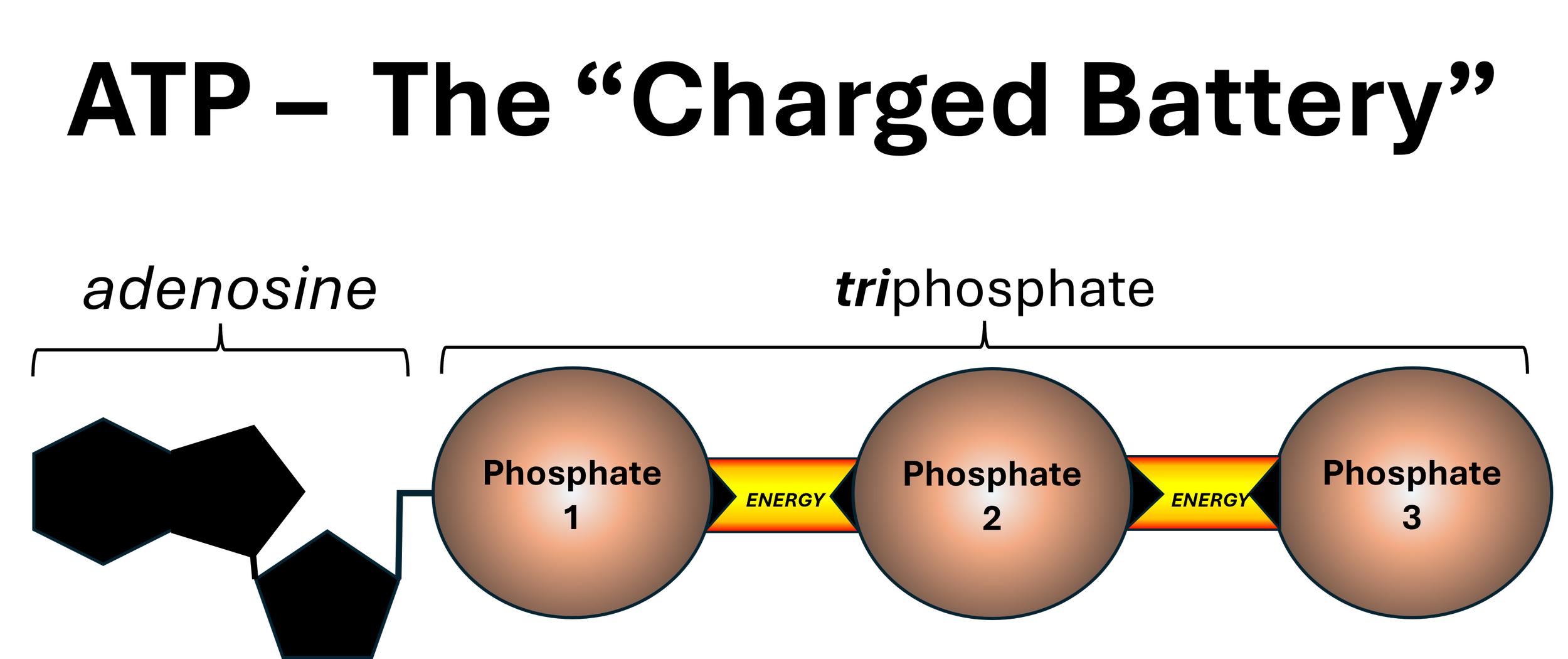
Slightly Deeper Dive: The Basic ATP - ADP Cycle
You can think of ATP a a charged battery. Energy is stored in the chemical bonds between the three (“tri”) phosphates.
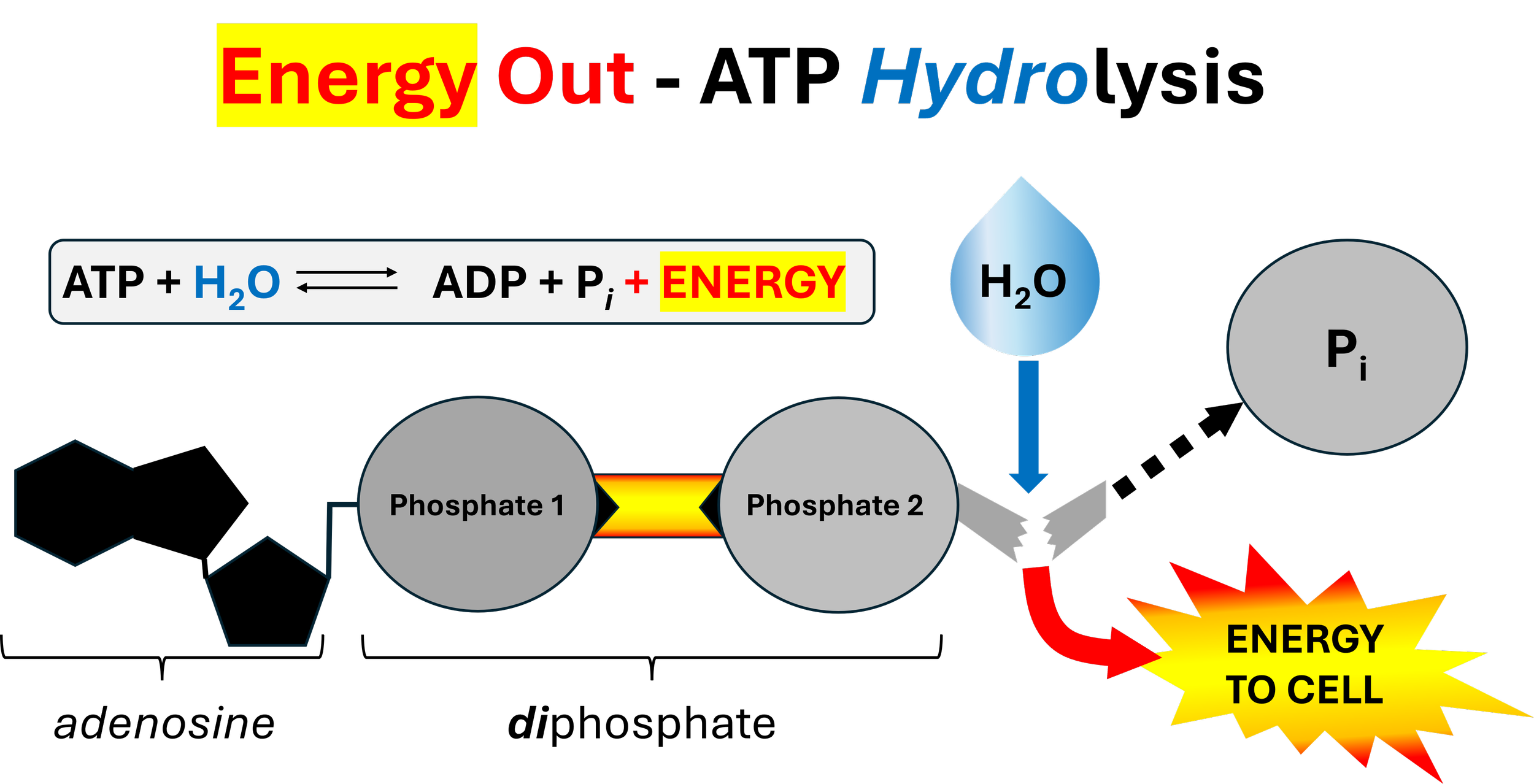
Water and an enzyme (ATPase) break off the outer phosphate. Hydro- means water, -lysis means cutting. That releases energy for use by the muscle fiber.
Cutting off a phosphate leaves only two attached - ADP (“di” instead of “tri” phosphate). Think of ADP as a spent battery in need of recharge.
In hard exercise, we blow through our on-hand supply of ATP in seconds. To keep going, we have to recharge and resupply ATP to the muscles.
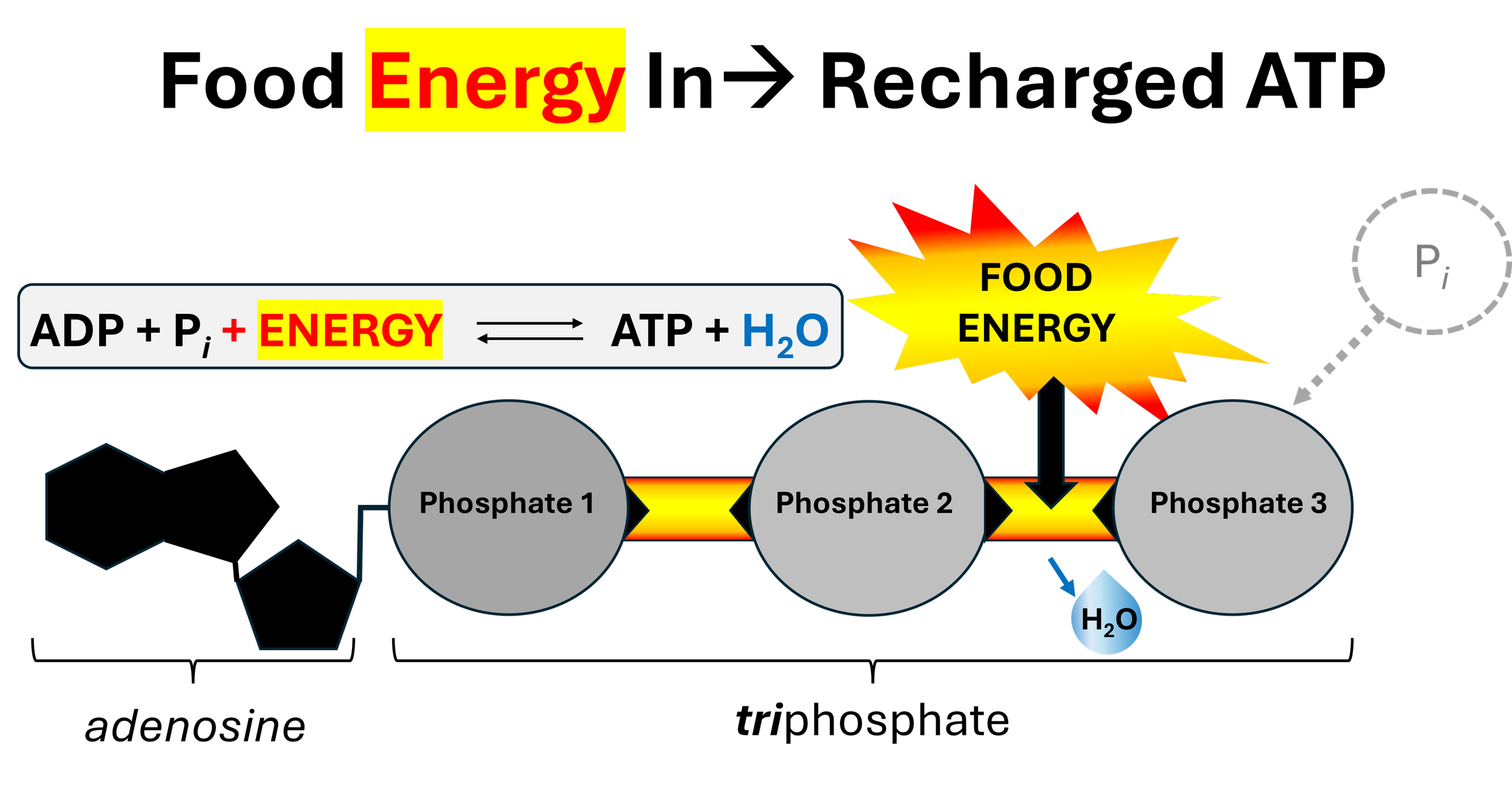
Our metabolic system breaks down fats and carbs, releasing energy. It uses that released food energy, a phosphate, and an enzyme (ATPsynthase) to rebuild ADP back into ATP - much like a recharged battery.
How well we supply ATP to the muscles is what determines whether we endure or must slow or stop due to fatigue.
Grit tells the body to try. ATP production determines whether it can.
