
Nutrition is as important as training. It doesn’t have to be complicated, expensive, or dogmatic.
Get three big things right and you’ll be set up for great health, and a great strength-to-weight ratio - and so, set up for success in the high and wild.
Adequate Protein
Forget any misconception that protein is just for maximizing muscle mass. It is just as important for endurance athletes.
The capillaries, mitochondria, tendons, bones, enzymes, and, yes, muscle fibers you are trying to create, repair, or improve with your training are built from proteins. Without enough protein, you’re like a person trying to build a house without enough lumber and shingles.
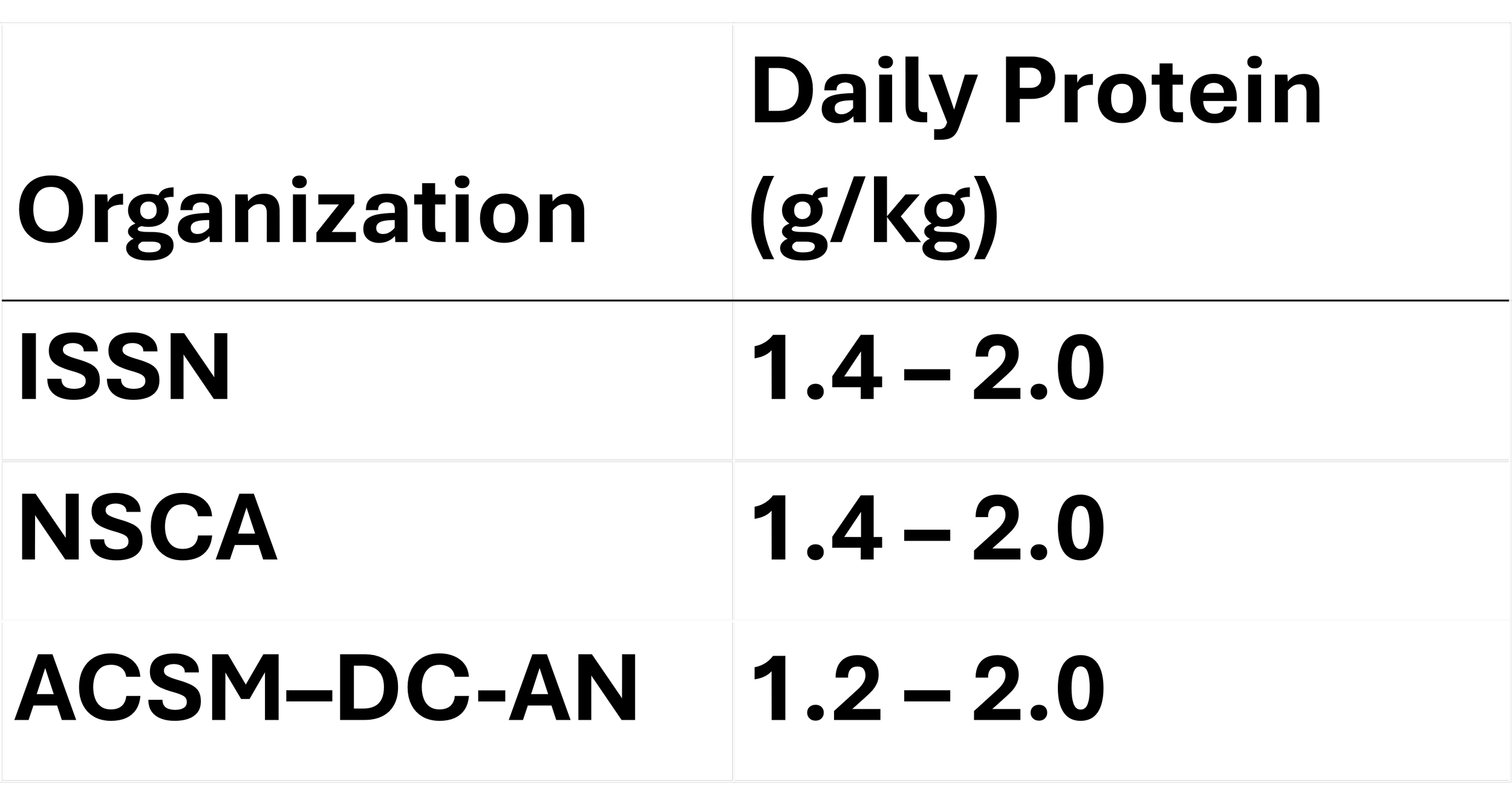
The recommended daily allowance (RDA) of 0.8 g/kg/day is intended for Joe Couch Potato – not you.
Athletes need more protein. Here are the daily protein intake recommendations for athletes of the International Society for Sports Nutrition, the American College of Sports Medicine, and the National Strength & Conditioning Association.
This is the “RDA” for you.
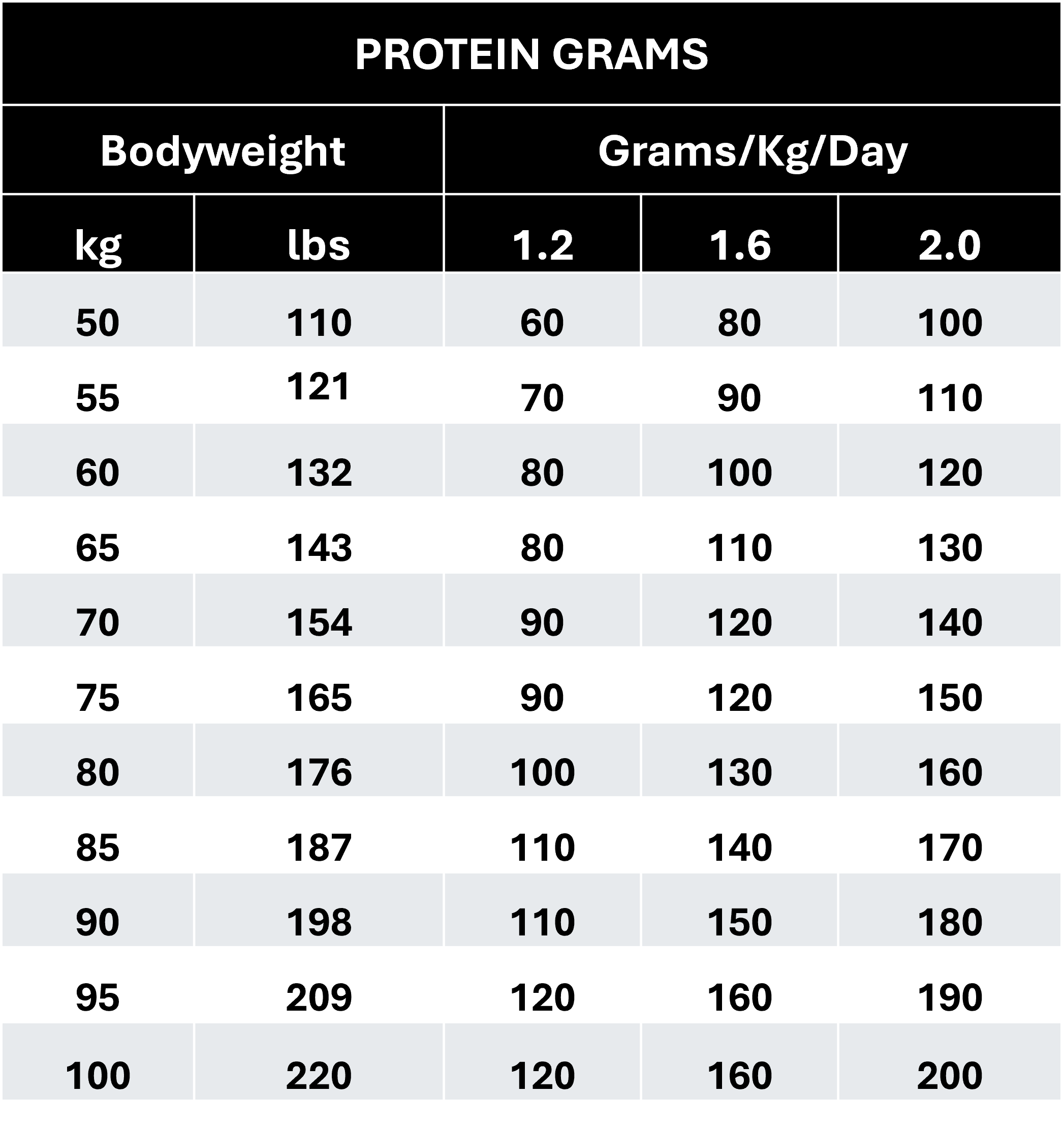
The range is 1.2 to 2.0 grams per kilogram of bodyweight per day.
We’ve done the math and metric system stuff for you.
Here are the total daily grams of protein you need for your bodyweight at the bottom, middle, and top of the recommended range for athletes (rounded up to the nearest 10 grams).
Practical application - Basically you need to eat 20-50 grams of quality protein several times per day. You might need to supplement occasionally, especially if you prefer a plant-based diet.
More protein is okay, but won’t do much more for you.
Don’t undercut your training by depriving your body of the very thing it needs most to remodel itself.
Hit your protein target – it’s the biggest no brainer in the history of no brainers.
The Right Energy Balance
You need the right amount of food energy (total calories) to achieve and/or maintain a healthy athletic body composition. Health matters most and trumps everything. You obviously don’t want to be lugging a lot of excess weight over mountain passes - a beer belly might as well be rocks in your pack. But athletic does not always mean “lighter” either. Overdo weight loss and you can end up sick, weaker and slower, not stronger and faster.
For many men, a good place is somewhere between 10-20% bodyfat.
For many women, it is often somewhere between 20-30% bodyfat.
Where “somewhere” is depends on your frame, health, and happiness. Be you and be healthy and happy. You’ll train better and be faster. The most awesome version of you is defined by how healthy you are, and how much you are enjoying your life - not a number. That’s the real target.
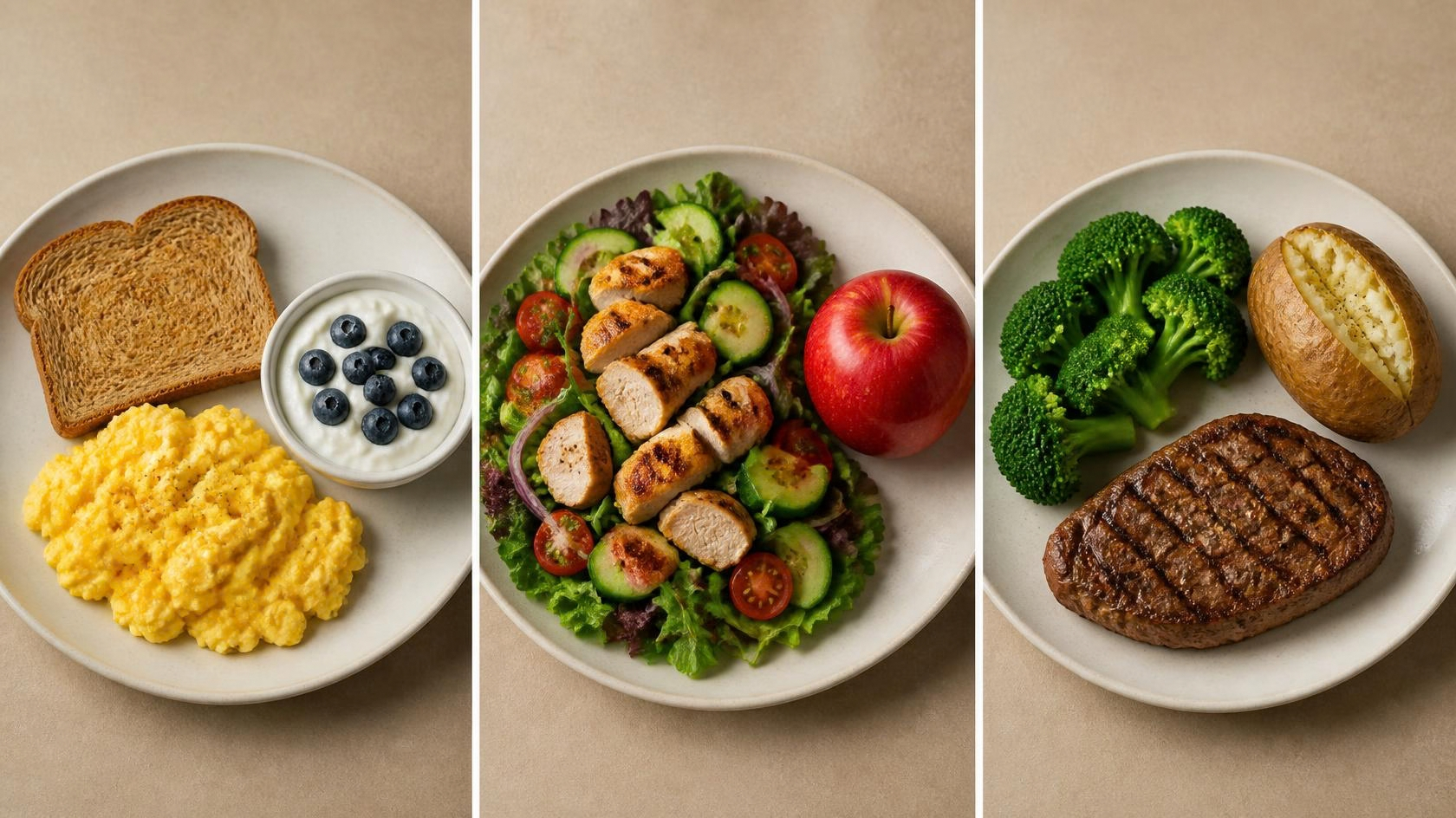
The basic concept is to maintain - or if appropriate, gradually and sensibly adjust -, the quantity and quality of your caloric intake, while staying healthy and feeling great.
In all cases, the song remains the same. Get your protein intake right, then prioritize getting most of the rest of your energy needs from nutrient-dense foods instead of calorie-dense foods. Do that well, combine it with sound training, and your bodyweight, body composition, and fitness will move in the right direction.
You can crush it at home, in restaurants, on the road. Train with us and you’ll learn how.
Fuel Your Long Endurance Workouts
Long bouts of exercise deplete your limited stores of carbohydrate (muscle glycogen and blood glucose). Replenish carbs during and after workouts that last 90 minutes or longer. Even endurance athletes known for a low-carb approach to their overall diet often use “strategic carbs” on their long training days and in races. You should too.

Intra-workout: Build up gradually over a few weeks to about one gram of carbs per minute of long endurance exercise – i.e., 20 grams of carbohydrate every 20 minutes. We are all a little different, and your perfect refueling strategy might not be the same as someone else’s. Long workouts are where you test the options and figure out what works best for you.
Please do it. You will keep “all systems go” throughout your long training sessions, and dial in your nutrition strategies and preferences. It makes a big, big difference in the quality and quantity of your training.
Post-workout: Get in the habit of consuming a carbohydrate and protein drink soon after each of your workouts - endurance, climbing, strength - all of them. A scoop of whey protein mixed with nonfat milk, or an equivalent pre-mixed drink, are great choices.
This gets the recovery and adaptation process going immediately. Do it and you’ll notice the difference within days.
There you have it. Simple stuff that works every single time. Getting healthy and fit is not about hype, fads, and trends. It is about physics and physiology - as real as real gets.
• Adequate protein
• Sensible energy balance
• Training fuel
And please don’t call it the “Eat Like An Athlete Diet” . . . oh what the heck, go ahead.
Bon appetit.
